Maybe you know an inspiring Christian woman who spends hours reading the Bible because she loves it, and she does it with confidence. She gets it, and it shows. You want to be like her, yet her experience feels beyond your reach. You don’t have hours to read every day. And studying? Where would you even begin? Besides, going to seminary is out of the question. Yet, deep down, you’ve longed for a simpler way to learn how to understand the Bible so you can delight in it, too.
I’ve been there. My Bible study journey began with opening to a random page, reading a few verses, and walking away feeling unchanged. Occasionally, I’d dip my toes into a deeper study and catch a glimpse of something better, but for a long time, I was too intimidated to really dive in.
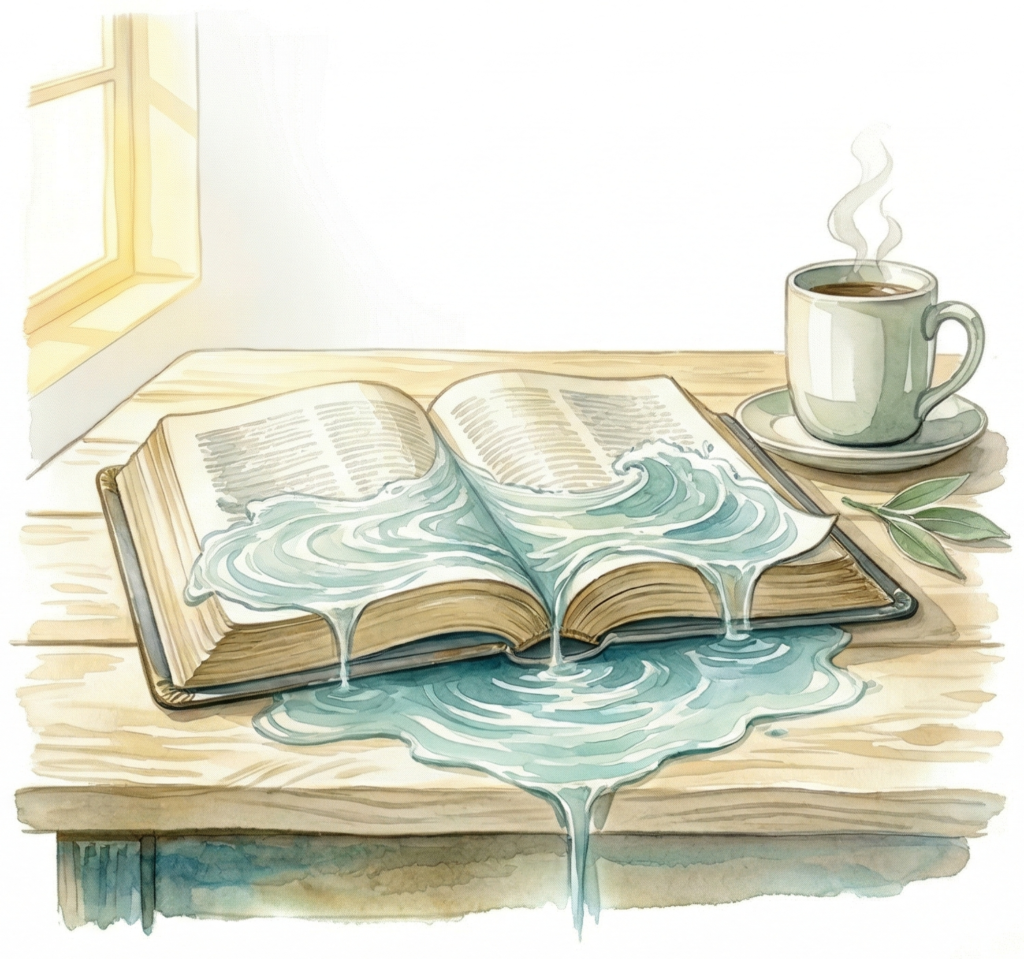
It reminds me of a common childhood memory. My teeth chatter with cold as I pace back and forth beside the pool, desperately wanting to join my dad in the deep end. Timidly, I dip my big toe in to find out if the water is as icy as I expect. “Just jump in!” Dad coaxes. “You’ll love it!”
Finally, the fear of missing out wins me over. I plug my nose, close my eyes, and jump. The chill of the water stings at first, but as my body slowly floats back to the surface, I realize I’m not shivering anymore. It’s actually warmer in the pool than it was on the sidelines. And Dad was right—I love it.
The same thing happened when I finally committed to studying God’s Word. Equipped with a few simple ways to study the Bible, I dove in and instantly wished I had done it sooner.
Why We Often Struggle to Understand the Bible
Often, the biggest hindrance to our understanding of the Bible is ourselves. Do you recognize any of these common Bible study mistakes in your own approach to God’s Word?
- Self-set deadlines: We’re conditioned by today’s society to see results now. So we become discouraged when we need more time to understand God’s Word. Or we rush the process in our impatience and miss out on rich rewards as a result.
- Our own agenda: We treat the Bible like a “roadmap” or “crystal ball” that will show us what we want to know or provide us a quick fix for our problems, rather than opening God’s Word to read the message He intends for us.
- Unrealistic expectations: We expect it to be quick and easy, and we expect that we’ll always achieve a perfect understanding—every time we open our Bibles.
- Preconceptions: We think we already know what a verse means even before we read what it says.
- Misplaced reliance: We rely on our own intellect to discern spiritual truth, or we rely too much on the interpretations of others without studying the Bible ourselves.
If you see yourself in these common approaches to studying the Bible, start with How to Study the Bible With Confidence and Delight for some welcome encouragement to help you “jump into the deep end” and delight in learning how to study the Bible for yourself.
Are you ready to dive in?
A Practical First Step
Before wrestling with the meaning of a Bible passage, read what it says. This sounds ridiculously obvious, doesn’t it? But we actually overlook what the words say and jump to conclusions about what they mean all the time.
Consider a news headline: “COVID-19 Cases Surge in Major Cities.” Different people could read the exact same words and immediately conclude different meanings. Someone might predict potential impacts on hospitals, travel, or the local economy. While another person might assume the implementation of stricter health measures. But did the text say anything about hospitals, travel, the economy, or health restrictions? No. What did the text say?
To help us slow down and read what the Scripture says before we determine what it means, we can simply ask questions—the five Ws and an H, to be exact. These are the same questions reporters ask and answer when they write a news report that sticks to the facts—who, what, where, when, why, and how. When reading a passage in the Bible, we might ask questions like:
- Who wrote this? To whom is it written? Who is this about?
- What happened? What will or might happen?
- Where, when, why, and how did this happen?
In asking these questions, we’re looking for answers that are right in the text without us having to guess. We focus on the facts, as stated in the words on the page.
What’s the Big Deal With Biblical Context?
Context really is key to understanding the Bible. If you do nothing else, learn the context of the verse or passage you’re studying. The context prevents us from misunderstanding God’s intended meaning.
There are different types of context, and you’ll learn some of them automatically by asking those five Ws and an H questions. For example, who wrote the passage and who they wrote it for are two key points of context that will help you understand the message. To learn more about the various layers of context, read Bible Study Tips for Beginners: Five Types of Context. For now, consider this quick list of contexts for any Bible verse:
- Immediate Context: The verses right before and after.
- Book Context: The book of the Bible the verse is in—its author, audience, purpose, themes, and genre
- Biblical Context: How does this fit into the Bible’s one big story?
Here’s the simple first step to find out the context of a Bible verse or passage: If you do nothing else, read the whole chapter. If you have time, read the whole book. For a deeper tutorial on the “how-to” of context, read Bible Study Tips for Beginners: How to Study the Bible in Context.
The Bible Tells One Story
All 66 books of the Bible are ordained by God as an integral part of His story, revealing crucial details about Himself, the true Author, and conveying one overarching message to humanity.
What is the Bible’s one story? In short, it’s God’s story of redemption. The whole Bible, from Genesis through Revelation, conveys the message that God is holy and we are sinful. But because of His love and grace, Jesus reconciles us to God through His life, death, and resurrection, and offers salvation from sin and eternal life to all who repent and believe in Him.
It’s the good news, the gospel.
Every passage in the Bible—even the “dry” ones, like genealogies—tells us something about:
- God: His character, nature, and promises
- Humanity: our struggle with sin and the world, and our need for a Savior
- The Gospel: the solution to our sin problem through the Savior, Jesus Christ
For more about how to read the whole Bible through this “gospel lens,” read Bible Study Tips for Beginners: How to Read the Whole Bible as God’s Good News.
A simple way to train ourselves to see how a passage fits into the Bible’s one story is to ask these three questions:
- What does this teach about God?
- What does this teach about humanity?
- What does this teach about the gospel?
3 “Quick Wins” for Your Bible Study
Context and the Bible’s one big story are pretty big topics. Maybe you’re still feeling overwhelmed or intimidated. You just want something quick—a simple Bible study for beginners, something easy you can do right now with any verse in the Bible. I’ve got you!
If you only have a few minutes or you just don’t have the mental space for more at the moment, try one of these three simple Bible study tools:
Various translations
Read the verse in various Bible translations to gain a better understanding of unfamiliar or hard-to-understand phrases. Visit Bible Hub, type the reference into the search bar, and you’ll see the verse listed in over 20 languages on a single page. Try comparing a more literal translation (like the ESV) with a more fluid one (like the NLT).
Cross-references
Does your Bible have tiny references to other verses in the margin or center column? Read the verses those tiny letters refer to to see how the Bible explains itself. This is actually another way to learn how a single verse fits into the context of the whole Bible. Want a more detailed explanation? Read Bible Study Tips for Beginners: How to Use Cross-References in the Bible.
Bible dictionary or concordance
Look up a word in a Bible dictionary or concordance to find the definition and gain a better understanding of the whole verse. These tools are available for free online at Blue Letter Bible or STEP Bible. Need more help? Read Bible Study Tips for Beginners: How to Do a Word Study.
From Knowing the Words to Enjoying the Author
I started this post with a childhood memory of jumping into the pool after shivering on the sidelines. After jumping in, I could’ve focused so much on my swimming skills that I still missed out on the fun of joining my dad. I’m glad I didn’t focus solely on perfecting my backstroke or my flutter form. Instead, I simply delighted in making that memory together with people I dearly love.
It’s easy for us to get caught up in all the Bible study tips and tools and miss the whole point. We can become so focused on learning how that we forget the why. We don’t study the Bible to master a Book; we study to know God. And the more we know Him, the more we’ll delight in His Word. The more we know Him and delight in His Word, the more we become like Him (2 Corinthians 3:18).
Here I am in the swimming pool of Bible study, hoping these simple ways to understand the Bible give you the confidence to do more than dip your toes in. Won’t you jump in? You’ll love it!
Do you want a handy reference guide to help you practice these simple ways to understand God’s Word? I created this free resource just for you—5 Simple Tips for Studying the Bible. This quick-start guide gives you practical skills you can use today to begin mining the riches of Scripture for yourself.
Thank you!
You will receive a confirmation request email shortly. Please check your spam folder if you don’t see it in your inbox.